If you are thinking about a move to Portola Valley, the real question is not just whether you can buy there. It is whether the town’s pace, setting, and housing pattern match the way you want to live. For some buyers, Portola Valley feels like a rare Peninsula retreat. For others, it may feel too quiet, too car-dependent, or too specialized. This guide will help you weigh the tradeoffs clearly so you can decide with confidence. Let’s dive in.
What Portola Valley Feels Like
Portola Valley is a small town with 4,456 residents spread across 9.1 square miles, according to the 2020 census. Town planning has long focused on preserving open space, scenic roads, trails, and safety. That gives the area a distinctly low-density, nature-centered feel.
This is not a conventional suburb with a tight street grid and rows of similar homes. The planning area includes mountainous and hilly land, steep wooded western slopes, gentler eastern hills, and the San Andreas Rift Zone across the valley floor. In day-to-day terms, that means the landscape shapes the town in a very visible way.
The Town Center plays an important role in local life. It includes the library, community hall, recreation fields, Town Hall, and the Historic Schoolhouse. Even with that civic hub, Portola Valley still reads more like a quiet hillside town than a traditional suburban commercial center.
Why Buyers Choose Portola Valley
Many buyers are drawn to Portola Valley for land, privacy, and trail access. The town says it has nearly the same number of trail miles as road miles, which is unusual for a Peninsula community. That trail network connects residents to places like Windy Hill and Coal Mine Ridge, and it also includes a car-free route linking schools, Town Center, and Ford Field.
If you want a home environment that feels tied closely to open space, Portola Valley stands out. The outdoor setting is not just a nearby amenity. It is part of how the town functions and how many residents move through daily life.
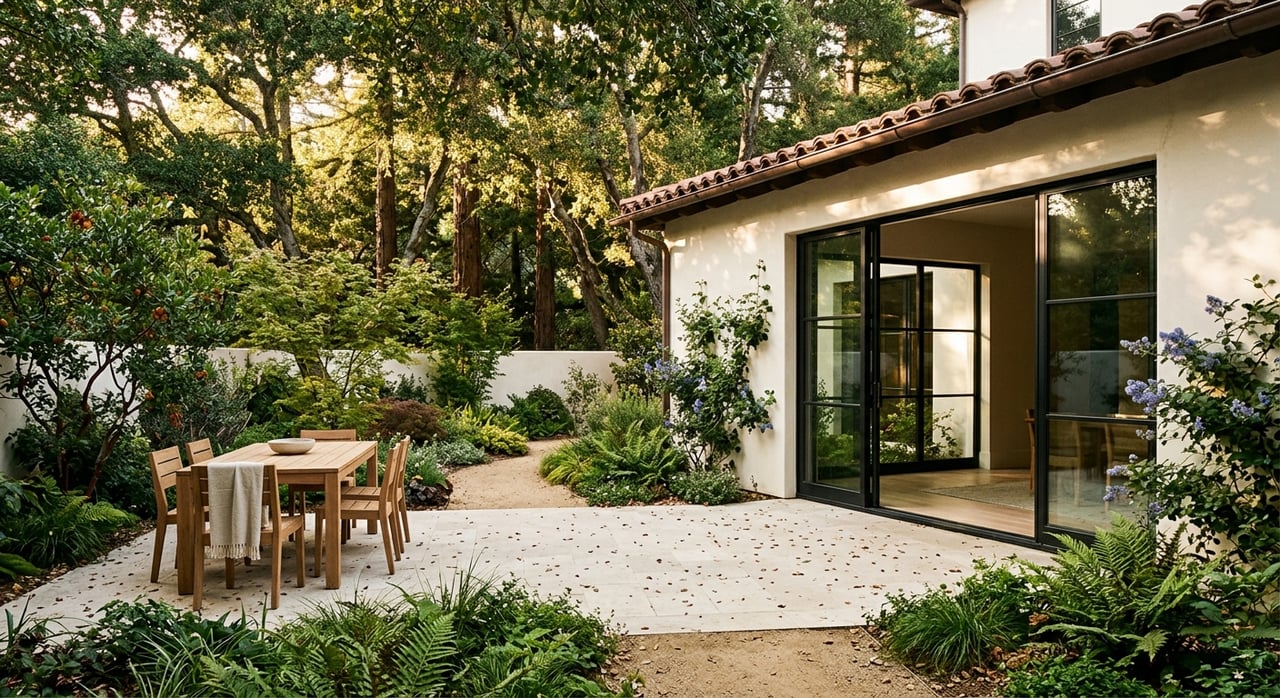
There is also a sense of visual variety in the housing stock. Town materials note that homes vary in style, size, height, and setbacks, with no single look defining the community. If you prefer site-specific homes over more standardized subdivisions, that can be a major plus.
Housing Is Distinct by Area
One of the most important things to understand is that Portola Valley is not one uniform housing market. Town planning documents divide the area into 11 residential areas. Official materials reference places such as Brookside Park/Brookside Orchard, Westridge, Woodside Highlands and Hayfields, and Portola Valley Ranch.
Those areas do not offer the same living experience. Westridge is described as a hilly area with large-acreage homes and horse properties. Portola Valley Ranch, by contrast, includes sidewalks and many homes on cul-de-sacs.
That difference matters when you are house hunting. A home in one part of town may offer a very different balance of privacy, terrain, walkability, and maintenance than a home in another. In Portola Valley, the specific property and its setting often matter just as much as the town name.
The Price Point Is High
Portola Valley sits at the upper end of the Peninsula market. In March 2026, Redfin reported a median sale price of $6.5 million in Portola Valley. That compared with $5.8 million in Woodside and $3.5 million in Palo Alto.
That pricing helps frame what buyers are paying for here. In many cases, the premium reflects land, privacy, and site quality rather than a broad range of housing options. This tends to be a low-turnover market, not a high-volume one.
It is also worth noting that monthly numbers can swing sharply because the number of sales is relatively small. Even so, the broader takeaway is consistent. Portola Valley is generally a premium market where buyers need a focused strategy and a clear sense of priorities.
Homes May Take Longer to Trade
March 2026 data also showed a median of 52 days on market in Portola Valley, compared with 8 days in Woodside and 10 days in Palo Alto. In a small market, that kind of figure should be read carefully because a few sales can skew the result.
Still, a longer timeline can reflect the specialized nature of the market. Buyers at this price point are often weighing land, topography, privacy, and home condition with extra care. Sellers may also need stronger presentation and pricing discipline because the buyer pool is narrower.
For you as a buyer or seller, that means patience and preparation matter. In Portola Valley, speed is not always the defining feature. Fit often matters more.
Daily Life Is Car-Oriented
Portola Valley offers a peaceful setting, but it comes with practical tradeoffs. The Town’s Local Road Safety Plan says residents usually commute by car, 39% of employed residents work outside town, and bus service is limited. Portola Road and Alpine Road serve as the main thoroughfares.
The town’s hilly terrain can also make biking around town difficult for many people. If you are used to frequent transit options or easy bike commuting, Portola Valley may feel less flexible than nearby communities. This is especially important if your schedule depends on fast, repeatable access to multiple destinations.
That said, some buyers see this as part of the appeal. A quieter, low-density setting often comes with more driving and less commercial intensity. Whether that feels like a benefit or a drawback depends on your routine.
The Setting Is Beautiful and More Rural
Portola Valley’s local environment is a real part of ownership. The Town notes that it is a dark-sky community with no streetlights. The Local Road Safety Plan also highlights wildlife, fire, and seismic conditions as part of everyday planning.
For many buyers, that natural setting is exactly the point. You may get a stronger sense of retreat and a closer connection to the landscape than in denser Peninsula locations. But it also means you should be comfortable with the realities of hillside and open-space living.
This is a place where the land shapes the experience of homeownership. If you love that, Portola Valley can be deeply rewarding. If you want a more predictable suburban setup, it may feel less convenient.
Schools and Community Anchors
Portola Valley’s trail and civic systems connect closely to schools and community gathering places. Public schools within town limits include Ormondale School for grades K through 3 and Corte Madera School for grades 4 through 8. Woodside High School serves grades 9 through 12, and Woodland School and Woodside Priory are also located in town.
The town’s safe-routes map links schools, Town Center, and Ford Field. That school-centered structure is part of how many households experience local life. It supports a community rhythm that feels small-scale and locally grounded.
When evaluating fit, it helps to think beyond home size and price. Ask whether the town’s civic layout and school-centered daily patterns align with how you want to spend your time.
Building and Remodeling Take More Planning
If you are considering a remodel, expansion, or long-term customization, Portola Valley has more oversight than a typical suburban town. The Architectural & Site Control Commission reviews additions of 400 square feet or more and any project that is two stories or taller. Geology review applies to site-development permits, new construction, and additions over 500 square feet.
The Town also states that allowed floor area depends on acreage, slope, zoning district, and whether geologic or flood zones affect the site. An 85% floor-area calculation is used to regulate massing. In simple terms, not every property offers the same expansion potential.
This matters because buyers sometimes assume a large lot means easy future growth. In Portola Valley, the property’s physical conditions and local rules play a major role. If you are buying with renovation plans in mind, due diligence is essential.
Who Portola Valley Fits Best
Portola Valley can be a strong fit if you are looking for a private, nature-connected Peninsula lifestyle. It often appeals to buyers who value land, quiet surroundings, distinctive homes, and direct access to trails and open space. If you want your home to feel set apart from a more conventional suburban pattern, the town may align well with your goals.
It may also work well if you are comfortable with a premium price point and a market where inventory is limited. Buyers here are often making a long-term lifestyle decision, not just chasing square footage or a short commute. That mindset tends to match the town well.
For sellers, Portola Valley can reward thoughtful positioning. Because homes are so site-specific, the story of the property often matters as much as standard metrics. Presentation, pricing, and a clear understanding of buyer priorities can make a meaningful difference.
When Another Town May Be Better
Portola Valley may be a weaker fit if you want transit flexibility, a more standardized housing product, or pricing closer to Palo Alto than to the top end of the Peninsula. It may also feel challenging if your routine depends on quick access to a broader mix of shops, services, and denser commercial areas.
You may want to think carefully if you prefer flatter streets, brighter nighttime infrastructure, or a simpler path for future additions and construction. None of these factors are deal-breakers on their own. They simply shape what ownership feels like.
The right move is the one that matches your everyday life, not just your wish list. Portola Valley offers a very specific kind of value, and that is exactly why fit matters so much here.
How to Decide With Confidence
If Portola Valley is on your shortlist, the best next step is to compare it through the lens of your real routine. Think about how much privacy you want, how often you drive, whether trail access matters, and how flexible you need the home to be over time. In this market, the details of the lot, location, and regulations can affect your long-term satisfaction just as much as the house itself.
A smart search here usually starts with honest priorities. You do not need the “perfect” town. You need the right match for your lifestyle, budget, and plans.
If you want help evaluating Portola Valley against nearby Peninsula options, Lyn Jason Cobb can help you compare homes, locations, and tradeoffs with clear local insight.
FAQs
Is Portola Valley more rural than nearby Peninsula towns?
- Yes. Town planning emphasizes open space, scenic roads, trails, and low-density development, which gives Portola Valley a more rural feel than many nearby Peninsula communities.
Is Portola Valley a good fit if you want trail access?
- Yes. The town says it has nearly the same number of trail miles as road miles, with connections to Windy Hill, Coal Mine Ridge, schools, Town Center, and Ford Field.
Is Portola Valley expensive compared with Woodside and Palo Alto?
- Based on March 2026 Redfin data, yes. The median sale price was $6.5 million in Portola Valley, compared with $5.8 million in Woodside and $3.5 million in Palo Alto.
Is Portola Valley easy to navigate without a car?
- Usually not. The Town’s Local Road Safety Plan says residents usually commute by car and that bus service is limited.
Is Portola Valley a place with similar-looking homes?
- No. Town materials say there is no single appearance for residences, and homes vary in style, size, height, and setbacks.
Is Portola Valley a good choice if you plan to remodel?
- It can be, but you should plan carefully. The town reviews certain additions and larger projects, and allowable floor area depends on factors like acreage, slope, zoning, and geologic or flood constraints.
