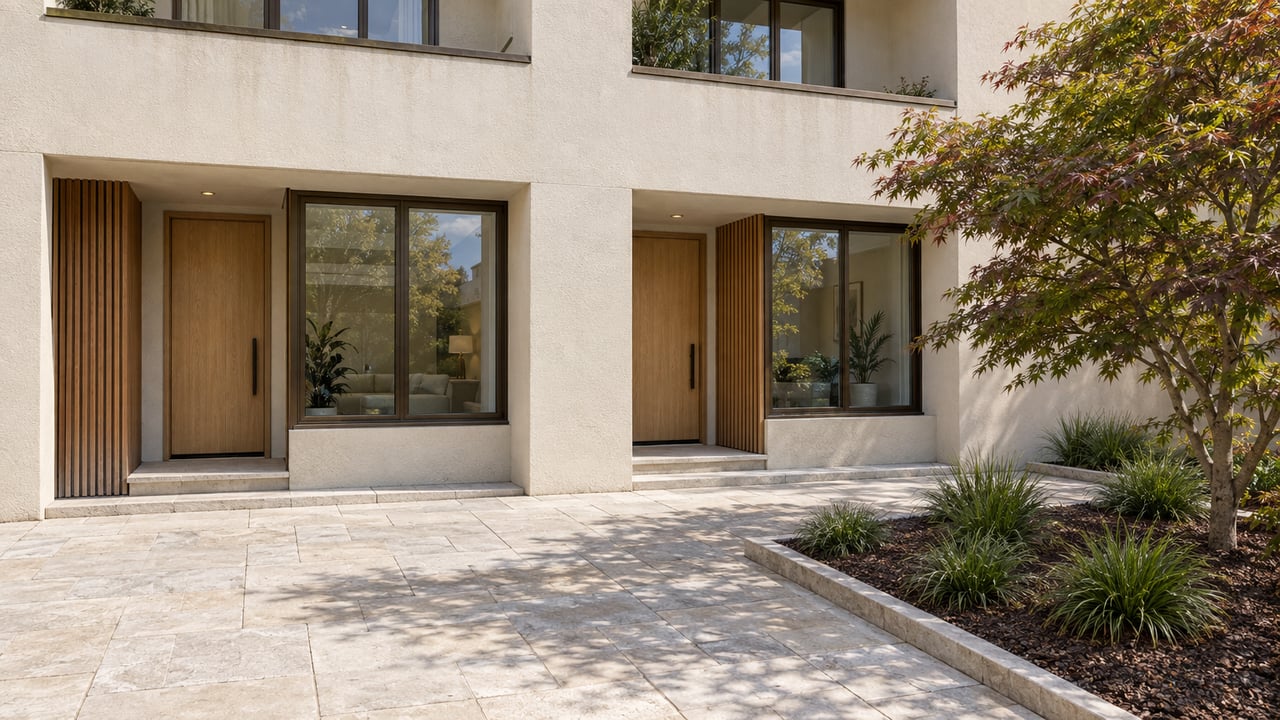
When you buy a Mountain View condo or townhome, you get a stack of documents the single-family buyer down the street never sees. California Civil Code §4525 requires the seller to provide the association's governing documents and its latest annual report. The packet also includes a statement of current regular and special assessments and any assessment changes the board has approved that aren't yet due. Since January 1, 2026, it has also had to include the latest inspection report on the building's balconies, decks and other exterior elevated elements.
Those pages describe costs that come with the deed. Mountain View's August 2026 numbers suggest buyers are pricing those costs in. In California's 2026 legislative session, lawmakers declined to lower the existing 20% ceiling on annual HOA dues increases, and the new rules on reserve funding don't take effect until 2032. For the next several years, the packet is the best guide you have to what a given condo will really cost.
The two speeds of one city
The Santa Clara County Association of Realtors' August 2026 report splits Mountain View into two markets that barely resemble each other.
| Mountain View, August 2026 | Single-family | Condo & townhome |
|---|---|---|
| Closed sales | 12 | 21 |
| Median price | $2,550,000 | $985,000 |
| Median price per sq. ft. | $1,770 | $896 |
| Average days on market | 9 | 33 |
| Percent of list price received | 107% | 102% |
| Current inventory | 13 | 47 |
Compare inventory with closed sales. In August, single-family inventory was roughly equal to one month of sales. Condo and townhome inventory was more than double the month's sales. Attached homes still sold above list on average, but they sat almost four times as long, and at about half the price per square foot.
It would be easy to blame a condo glut, but the county data doesn't support that. MLSListings' August 2026 reports show Santa Clara County inventory rising almost equally in both segments. Single-family inventory was up 19% from a year earlier, and condo and townhouse inventory was up 20%. Even so, the median county condo took 26 days to sell at 100% of list, while the median house took 12 days at 103%. Supply grew at the same pace in both segments, but buyers moved more slowly on condos.
One likely reason is that a condo buyer is pricing two things at once: the unit, and their share of the association's future bills.
Where the second price comes from
The pressure on that second price is statewide and well documented. In an October 2, 2026 report, the Los Angeles Times named three main sources of rising condo-owner costs: aging buildings, higher insurance as insurers pull back from California, and required balcony inspections. The Times also reported that the possibility of surprise fees may be making some buyers hesitant about condos. Its lead example was the Vilamoura community in San Clemente, where owners were each hit with a $26,000 assessment to replace the roofs.
"We have a lot of condo complexes in California which were built during the early 2000s during that building boom … and those are the ones that are aging right now. The years catch up, and suddenly you've got these things falling apart or rotting." Michael Kushner, HOA attorney, quoted in the Los Angeles Times
According to a CalMatters report republished in June by the Mountain View Voice, HOA dues in the Bay Area can reach several thousand dollars a month. The money covers maintenance, repairs and insurance, split among owners according to a budget the board sets. In the same article, state Sen. Catherine Blakespear said rising energy and insurance bills, not board decisions, are driving the increases.
No local source has shown that HOA costs alone explain Mountain View's August gap. The connection is still hard to ignore. When a buyer can't tell how much monthly costs will rise, they take longer to decide and bid closer to list.
What Sacramento decided this fall
This year's legislative session could have made those future costs more predictable. Here's what happened to the three main HOA bills.
SB 1007 died. It would have cut the maximum annual dues increase a board can impose without a member vote from 20% to 8%. The bill passed the Senate 24–13 on May 27, 2026. The author then canceled its Assembly hearing, and it died in committee. The 20% ceiling on increases without a member vote still stands. Testifying at the March hearing, Marjorie Murray of the Center for California Homeowner Association Law described what that ceiling can add up to:
"Even regular assessments raised by 20% will double in four years and triple in five."
AB 1184 died at adjournment. This transparency bill would have made recordings of open board meetings part of the association's records and added information about active litigation to the annual budget report. It passed both houses without a single no vote, but the Assembly never took its final concurrence vote.
AB 2050 became law, with a long delay. Gov. Newsom signed it on September 29, 2026, as Chapter 796. Its reserve rules don't take effect until January 1, 2032. From then on, reserve studies must identify the contribution needed to keep reserves from falling below zero over 30 years, and associations must fund at least that much. If reserves are still projected to run out, the association must move at least 15% of its gross annual budget into reserves each year. If the budget can't cover the minimum, the law requires a reserve-funding special assessment, which can be levied no more than once every nine years.
Taken together, the 2026 session settled the long-term rules and left the next five years largely as they were. A condo bought in Mountain View this fall will spend its first years of ownership under the current rules. An association that is underfunded today can stay that way until 2032. After that, the new requirements may mean higher transfers or a special assessment. Both possibilities trace back to the reserve figures in the packet.
Reading the packet for the number that matters
The balcony rules have already taken effect. Civil Code §5551 covers condo buildings with at least three attached units where the association is responsible for maintaining or repairing the elevated elements. For most of those buildings, the first exterior elevated element inspection was due by January 1, 2025, and must be repeated at least every nine years. Newer buildings can have a later first deadline, and the 2025 deadline was not extended. If a building is covered, SB 410 makes its latest inspection report part of what you receive.
The documents that come closest to showing the second price are:
- The Assessment and Reserve Funding Disclosure Summary. This state form, required by Civil Code §5570, lists current and scheduled assessments and states whether reserves are projected to be sufficient over 30 years. It also shows any additional contributions that aren't yet funded, along with funding percentages.
- The reserve funding plan summary and the likely special-assessment information in the annual budget report. Any association member can request the full reserve plan.
- The assessment statement, especially increases the board has approved that aren't yet due.
- The approved board meeting minutes from the past 12 months, not including executive sessions, which the seller must provide if you request them.
- The exterior elevated element inspection report, which shows what the inspector found and what repairs may follow.
Two Mountain View condos listed at the same price can carry very different future costs, and these documents are where the difference shows up. When those costs are unclear, it can account for some of the gap between 33 days and 9. A well-funded association with a clean inspection report and no pending assessments may be an advantage the list price doesn't reflect.
The new buildings in the pipeline
Mountain View's condo pipeline is still years from the resale market. The Mountain View Voice reported that DeNardi Wang Homes' 216-unit, seven-story condo project at 1919–1945 Gamel Way, proposed under the state's builder's remedy, received staff approval on September 8, 2026. Before the project can move forward, the City Council still has to act on vacating and selling the public street. The city's August 2026 development update also lists Lux Largo Development's proposal for 144 condominiums at 1411–1495 W. El Camino Real as under review.
New buildings start with new roofs, decks and systems, so they don't have the deferred-maintenance problems the Times described. They will, however, set up their reserves under AB 2050 in its final form. For buyers today, those projects don't change the decision in front of them. The choice is among existing associations, each with its own document packet.
FAQ
Can a Mountain View HOA raise dues by more than 8% a year? Yes. SB 1007 died in 2026, so the 20% annual ceiling on increases without a member vote still applies.
Does AB 2050 protect me from special assessments now? No. Its reserve study and funding requirements take effect January 1, 2032.
When do I receive the HOA documents? Civil Code §4525 requires the seller to provide them as soon as practicable before title transfers or the sales contract is signed. For questions about what a specific document means for your situation, consult a qualified attorney or financial advisor.
If you're comparing Mountain View condos and townhomes, Lyn Jason Cobb can go through the §4525 packet, reserve summary and inspection report with you before you write an offer. Schedule a consultation and bring the packet for the unit you're considering.
